Bakery drops: limited batches, a cutoff, then bake and post
A drop works like this. You announce a set number of bakes, for example 60 boxes of Halloween brownies. Orders open, and they close when the boxes sell out or a cutoff arrives, whichever comes first. Then you bake exactly what sold and hand it over or post it on a known date. Then you do it again.
Plenty of small bakeries work this way, and for good reason. You know what to bake before you turn the oven on, so nothing goes to waste. Your week has a shape. And a batch that can sell out gives people a reason to order now rather than "sometime".
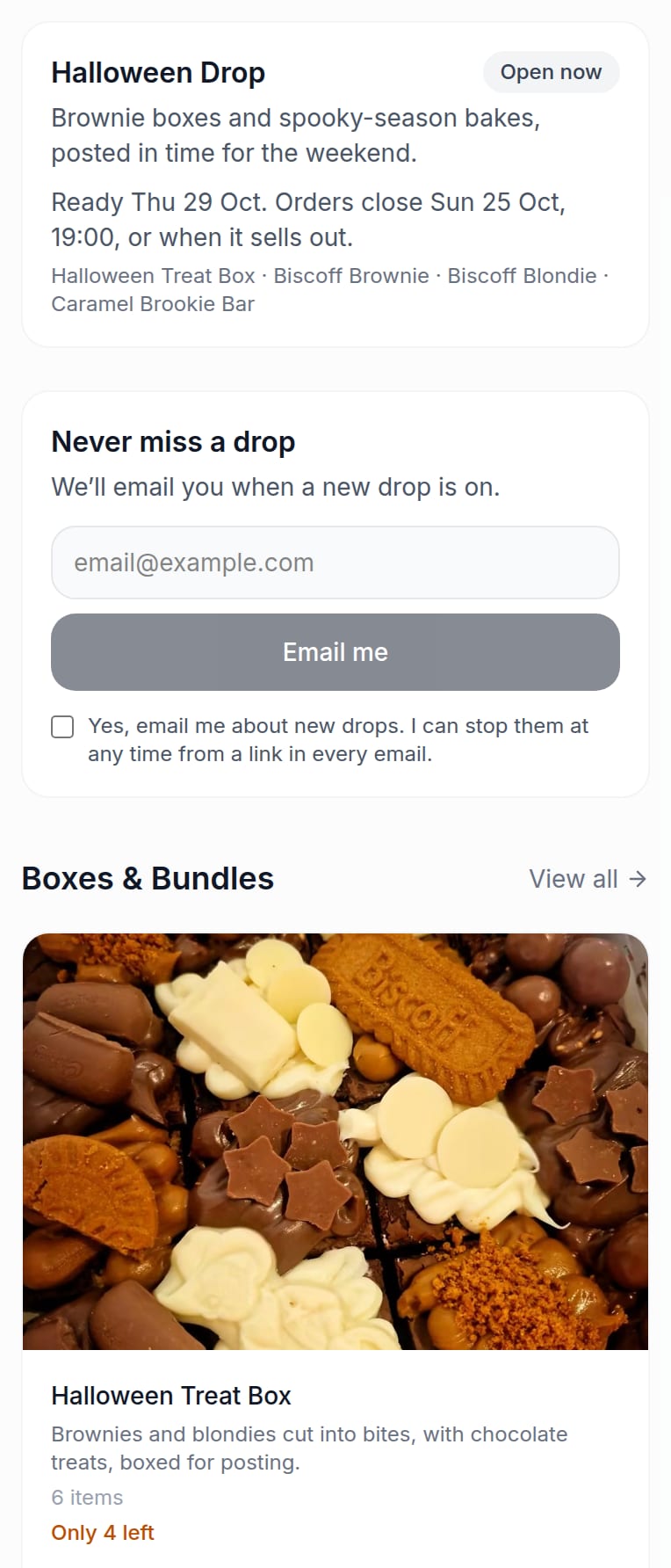
A drop on the shop page. Customers see when it closes and how many are left.
It also comes with a few problems that made-to-order selling doesn't have.
Selling exactly what you have
The core of a drop is the number. If you can bake 60 boxes, the 61st order is a problem: you either bake into the night or send an awkward refund message.
Counting by hand from your DMs works until two people order the last box within a minute of each other. A drop needs something that knows how many are left at the moment each order is placed. It should also hold a box while someone is typing in their card details, so the last one isn't sold twice.
In BakeCheck, a drop is a list of products or boxes, each with a quantity. Stock comes off as orders are placed. While a customer pays by card, their items are held for up to half an hour. If they back out, the items go back on sale. When an item runs out, your shop page says so, and nobody can order it.
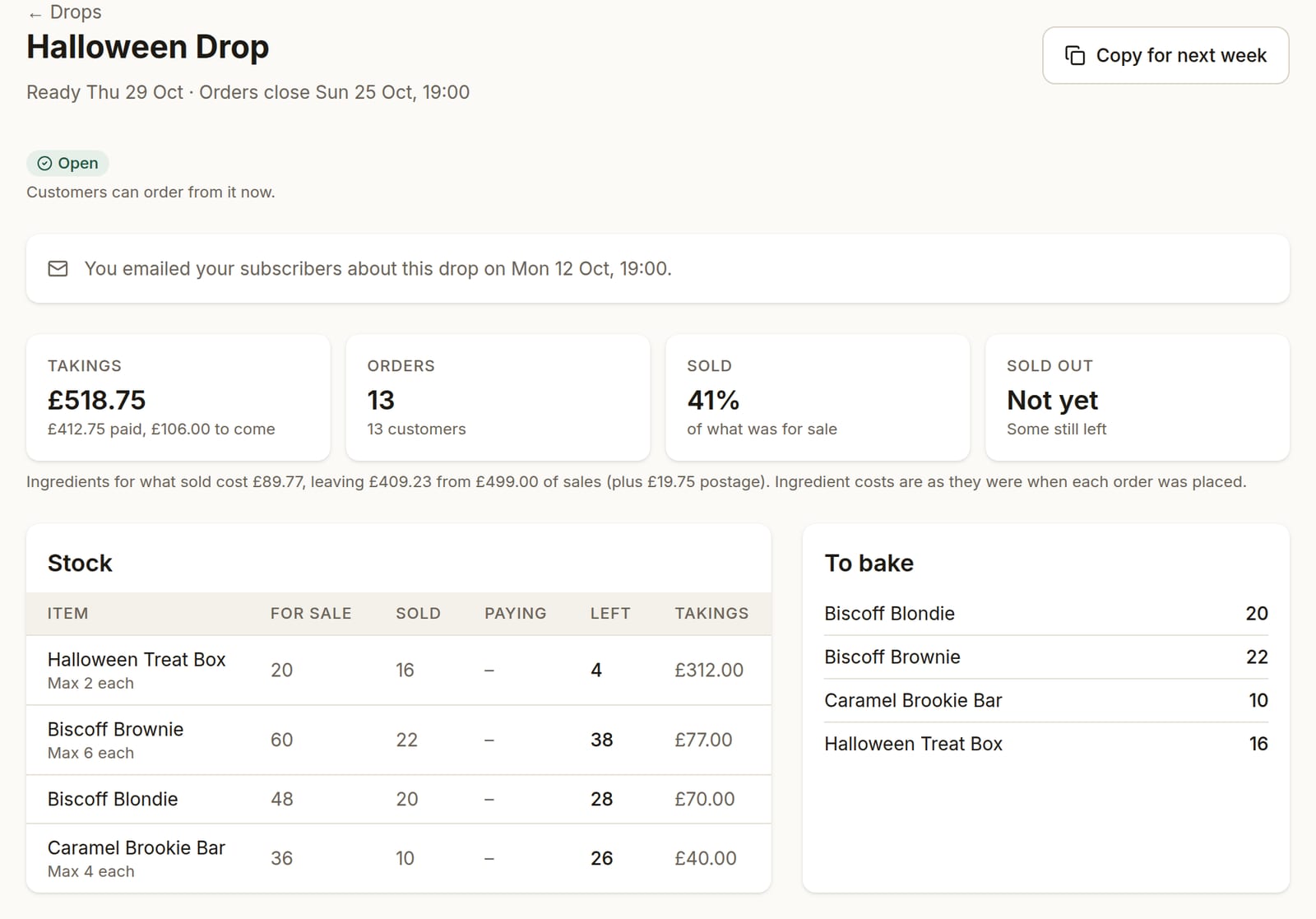
Your side of the drop: what's sold, what's left and what to bake, updated as orders come in.
Being fair about it
A popular drop sells out to whoever is quickest, and occasionally that's one person buying eight boxes. A limit per customer (one or two of the scarce item, say) spreads it around. BakeCheck applies the limit per email address, across all of that customer's orders in the drop, not just one basket.
Orders that arrive by phone or message still count. Add them to the drop yourself so the number stays true. You can choose to go over the quantity for a regular, because it's your stock.
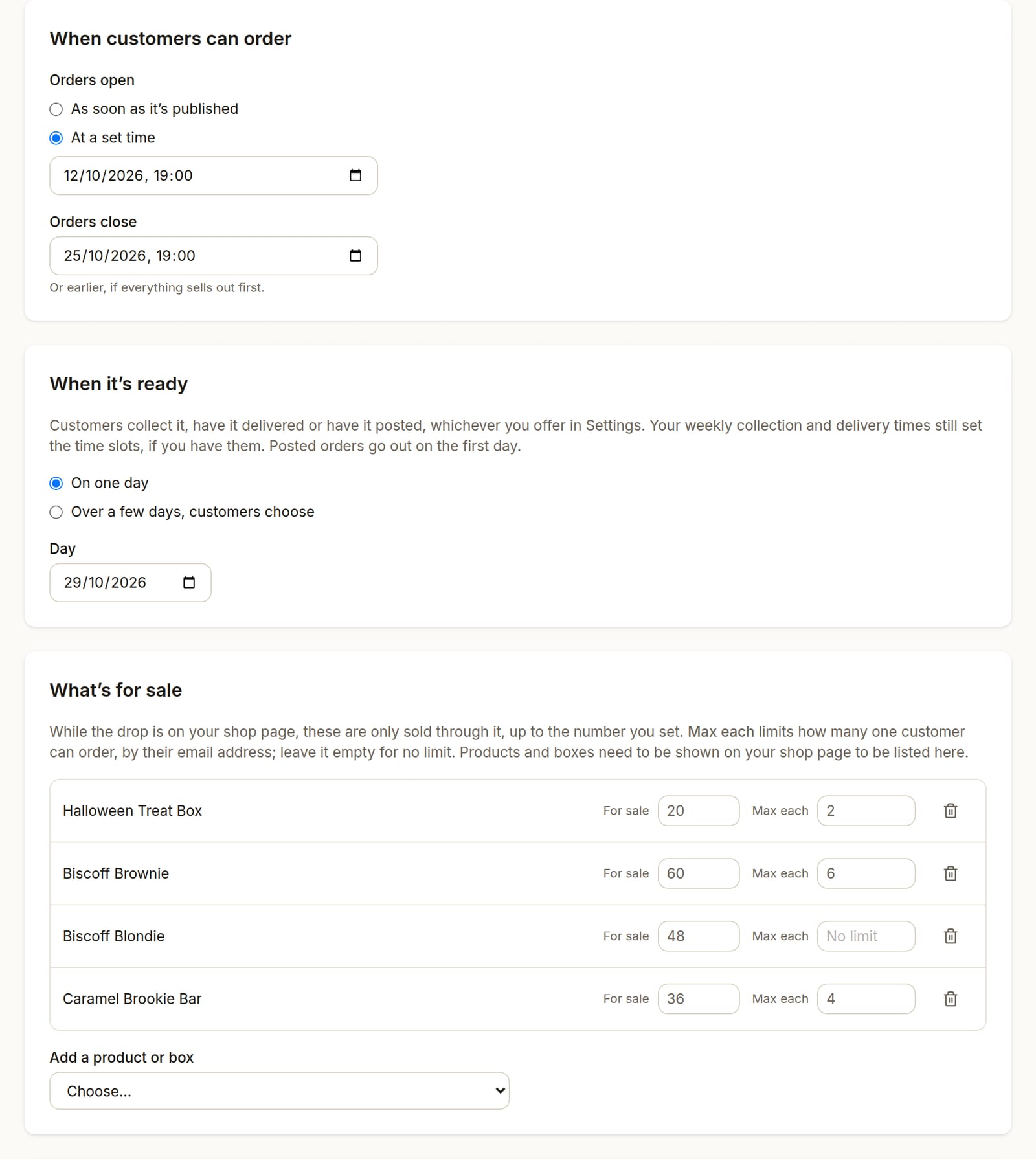
Setting up a drop: dates, quantities and a limit per customer.
Telling people it's coming
A drop only sells out if people know about it. Most bakers announce on Instagram and hope the algorithm cooperates.
An email list is more reliable, and in the UK it has rules. Under PECR you need someone's clear consent before you send them marketing email. The cleanest way to show that is double opt-in: they enter their address, then confirm it from an email you send. Every email after that needs an easy way to unsubscribe.
In BakeCheck, your shop page can offer "Email me about new drops", with double opt-in. When a drop is ready, you send one announcement email to everyone who confirmed, using your own email settings. Each email has a one-click unsubscribe, and anyone who unsubscribes is removed from the list completely. Your shop page also shows a countdown to when the drop opens and when it closes.
The cutoff, and the date
A drop needs a clear end, and customers need to know when their bakes arrive. That can be one date ("posted Thursday 30 October") or a short range they choose from ("collect any day 31 October to 2 November").
Your shop can run drops alongside normal made-to-order selling, or run on drops alone. While a product is in an upcoming or open drop, it can only be bought through the drop. That stops someone ordering the limited brownie as an ordinary order.
Posting bakes
Drops and post often go together. A fixed bake day makes posting manageable, and it opens your bakes up to customers well beyond collection distance.
Some things to settle first:
What a posted bake is, legally. Food packed before it goes in the post is prepacked. That means a full label on the pack: name of the food, a full ingredient list with allergens emphasised, a date mark, how to store it, and your business name and address. See bakers' food labels for the full list. The distance-selling rule applies too: allergen information must be available before purchase, and again on delivery. Your label on the box covers the second part.
What travels. Brownies, blondies, cookies and loaf cakes post well. Fresh-cream cakes and anything that needs a fridge do not. Mark those as "can't be posted" so customers aren't offered post on a basket that can't survive it. Check your carrier's rules on sending perishable food.
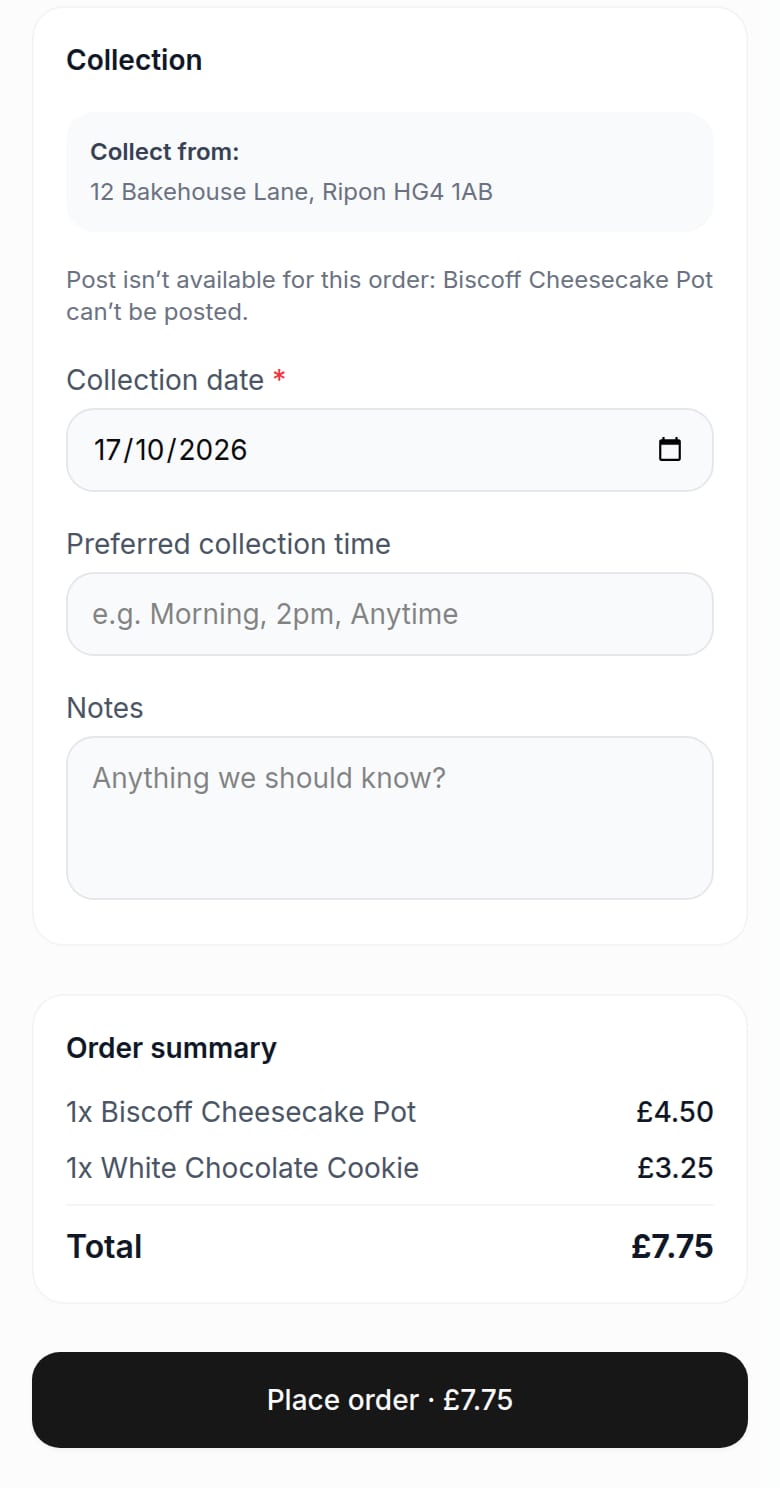
One item that can't travel takes post off the whole basket, and checkout says why.
What to charge. Charging postage per item sounds fair until someone buys four things that go in one box and pays four lots of postage. Weight-based pricing is more accurate, but customers can't predict it. Most small bakeries charge one fixed price per order that covers the box and the postage, often with free postage over a certain spend. That's how BakeCheck works: you set the price, and optionally the spend that makes it free.
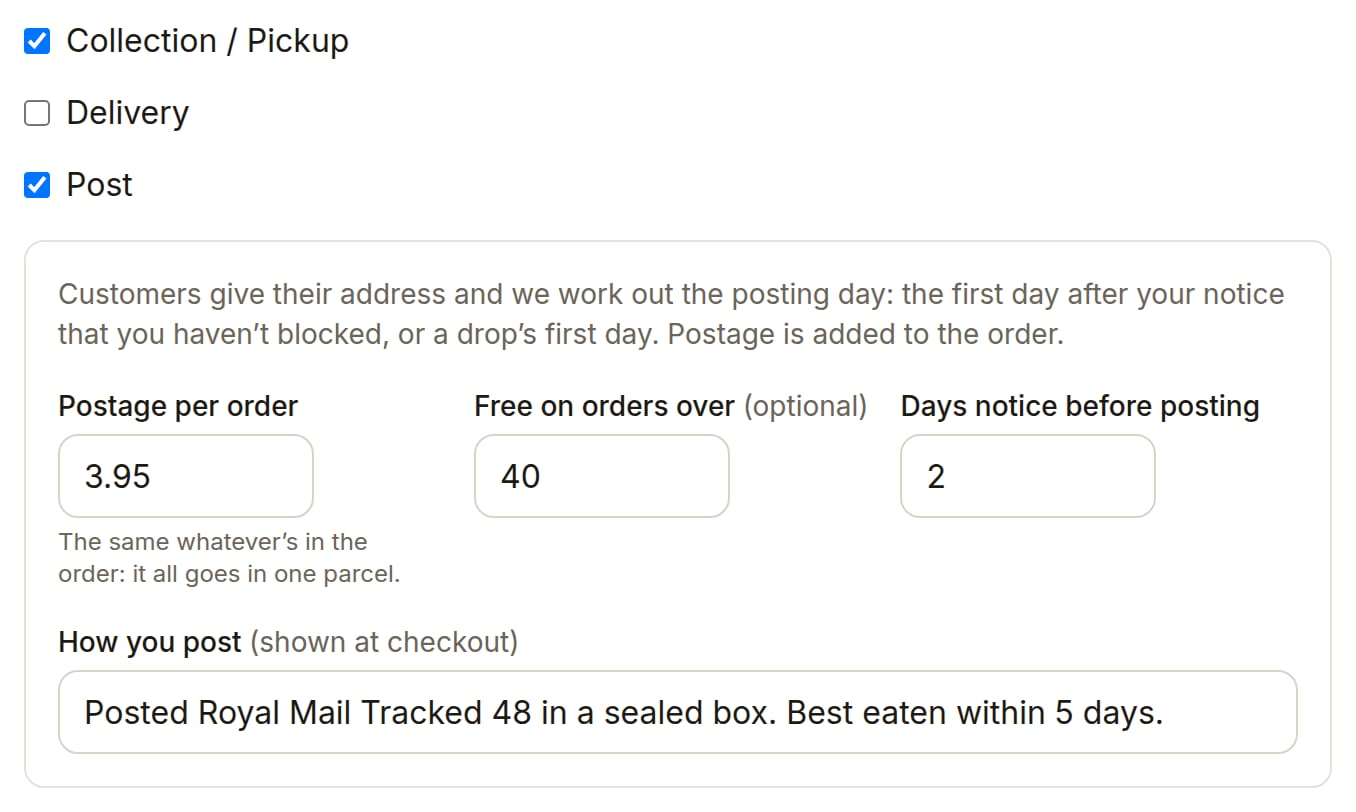
Postage is one price per order, with an optional free-postage threshold.
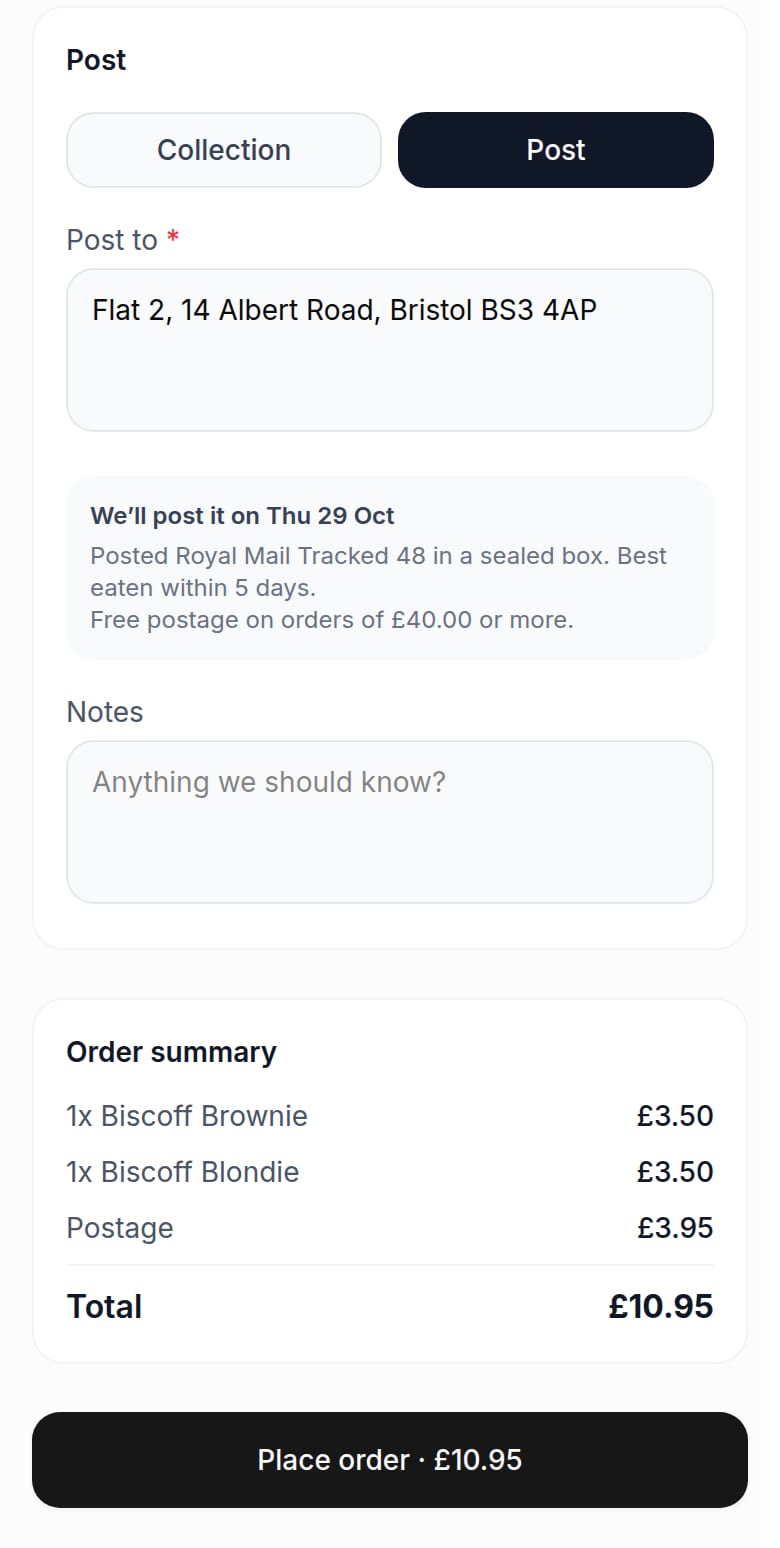
At checkout the customer sees the posting date and the postage before they order.
Returns. In general, the 14-day right to cancel an online order doesn't apply to goods that go off quickly, or to goods made to the customer's own specification. Your terms should still say what you'll do if a parcel arrives damaged or late.
Tracking. Customers will ask where their parcel is. When you mark an order as posted in BakeCheck, you pick the carrier and add the tracking number. The customer then gets an email that it's on its way, with a link to track it. In a drop you can do this down the packing list, one order after another.
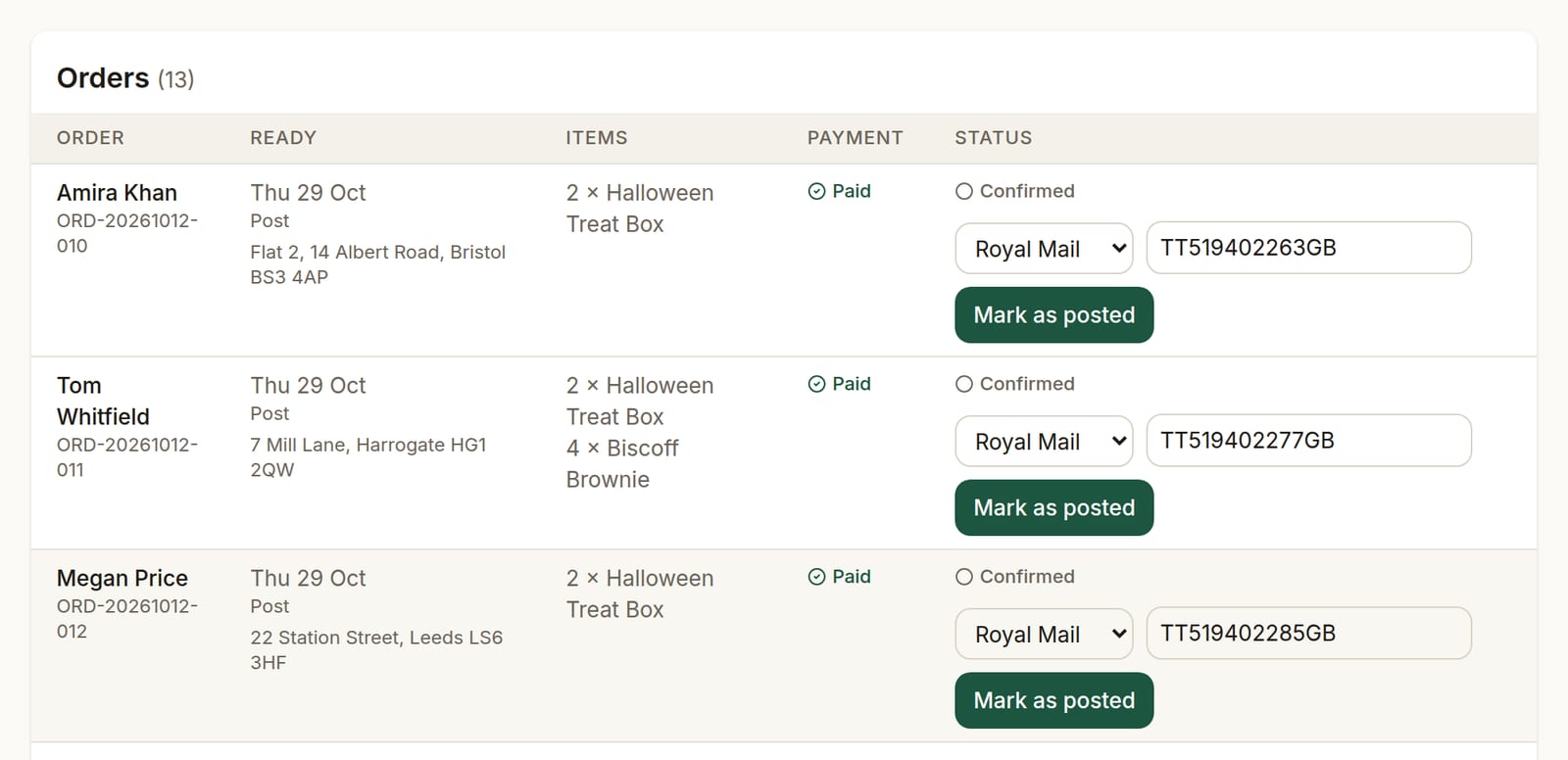
Posting day: work down the list, adding tracking numbers as you go.
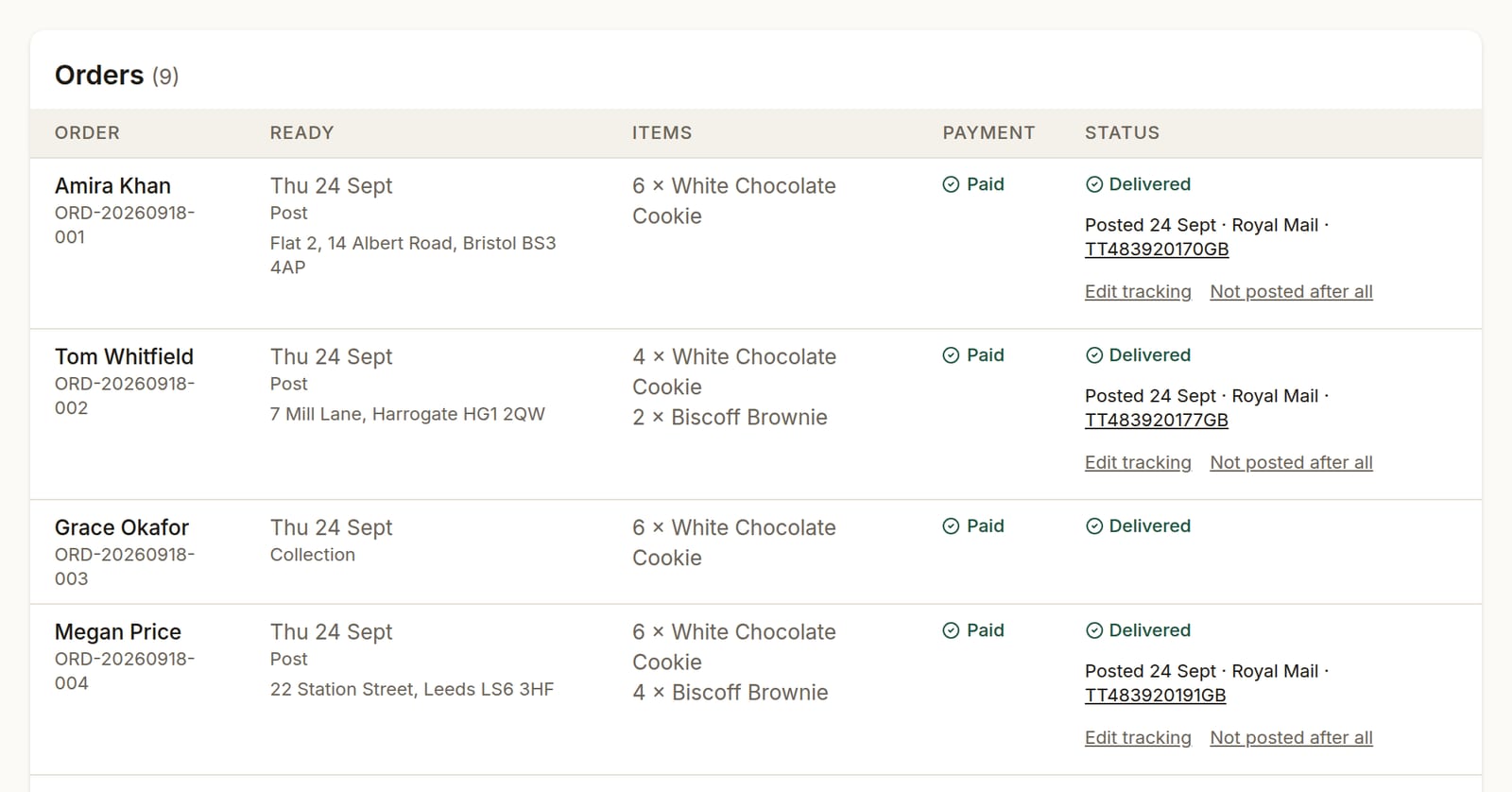
Once posted, each order shows its tracking number, linked to the carrier.
After the drop
A drop is easy to judge, and worth judging. Did it sell out? How fast? What sold and what didn't? Was the quantity right, or did you leave sales behind?
BakeCheck's drop report shows takings, what's paid and what's outstanding, how much of each item sold, and how long it took to sell out. If you've costed your recipes, it shows your ingredient cost as well. Next time, run it again with the numbers changed, starting from a copy of the last drop.
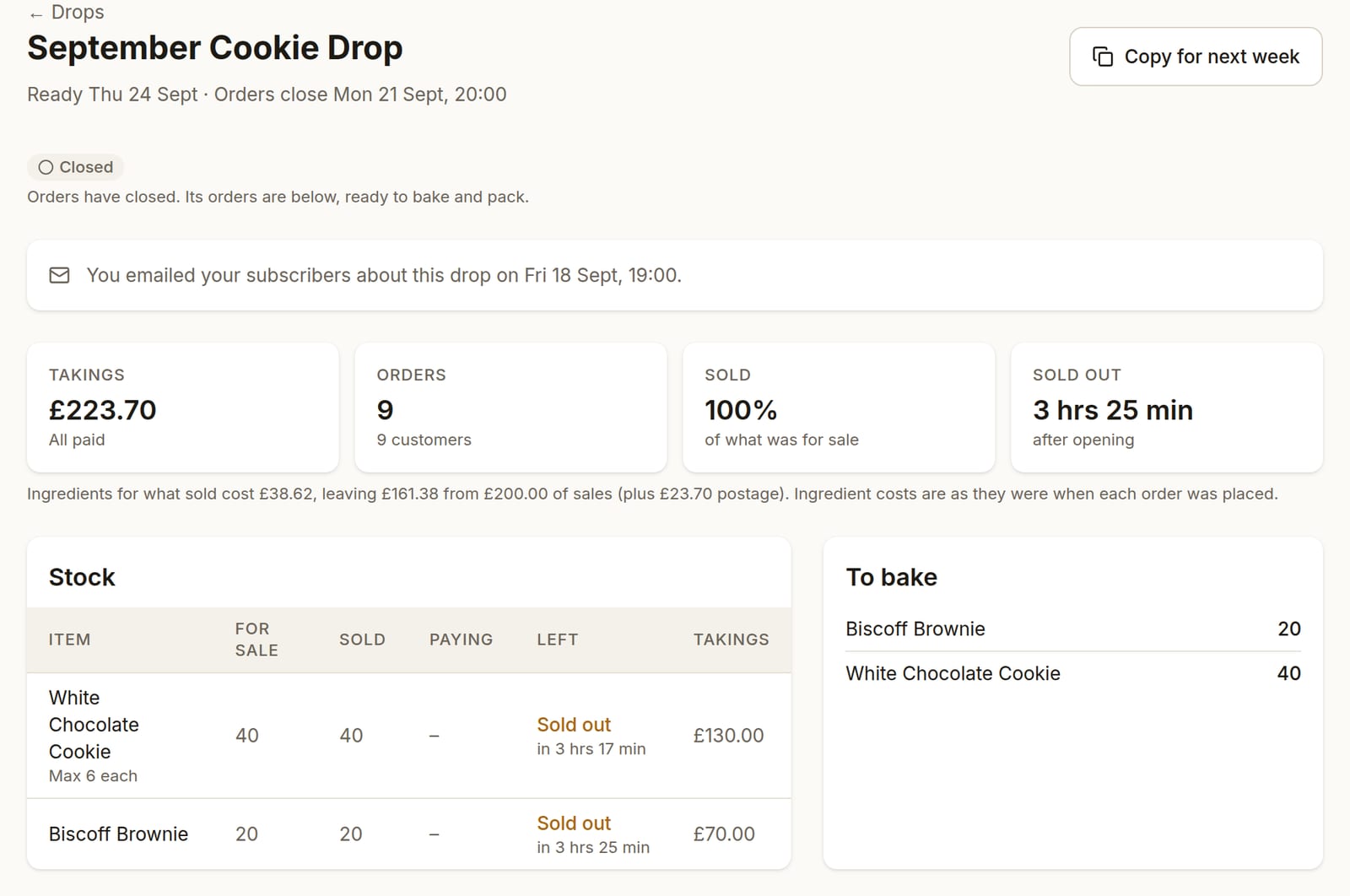
A finished drop: everything sold, in under three and a half hours.
A checklist for your first drop
- Choose a quantity you can bake comfortably, not the most you possibly could.
- Make sure every product in the drop has an approved label. Posted bakes are prepacked.
- Decide the date, or the range of dates, before you open orders.
- Set a limit per customer on anything you expect to sell out fast.
- Give people a few days' notice by email and on social media.
- Order boxes and packaging before the drop opens, not after it sells out.
General guidance, not legal advice. Rules differ between England, Wales, Scotland and Northern Ireland. Check Food Standards Agency guidance, the ICO's guidance on marketing email, and your local authority.
BakeCheck keeps ingredients, recipes and allergen-checked labels in one place, with an approval step before anything prints and a version history you can point at afterwards.
Start free