Selling bakes online without a website
Most small bakeries already sell online. They just don't call it that. The orders come in through Instagram messages, Facebook comments and texts, and the same four questions get answered again and again. What have you got? What's in it? When can I collect? How do I pay?
A website feels like the fix, but a website is a project. You need a builder, a domain and a theme, and then you have to keep it up to date. What most bakers need is smaller: one page that answers those four questions, a link that goes in an Instagram bio, and somewhere a customer can see allergens before they message.
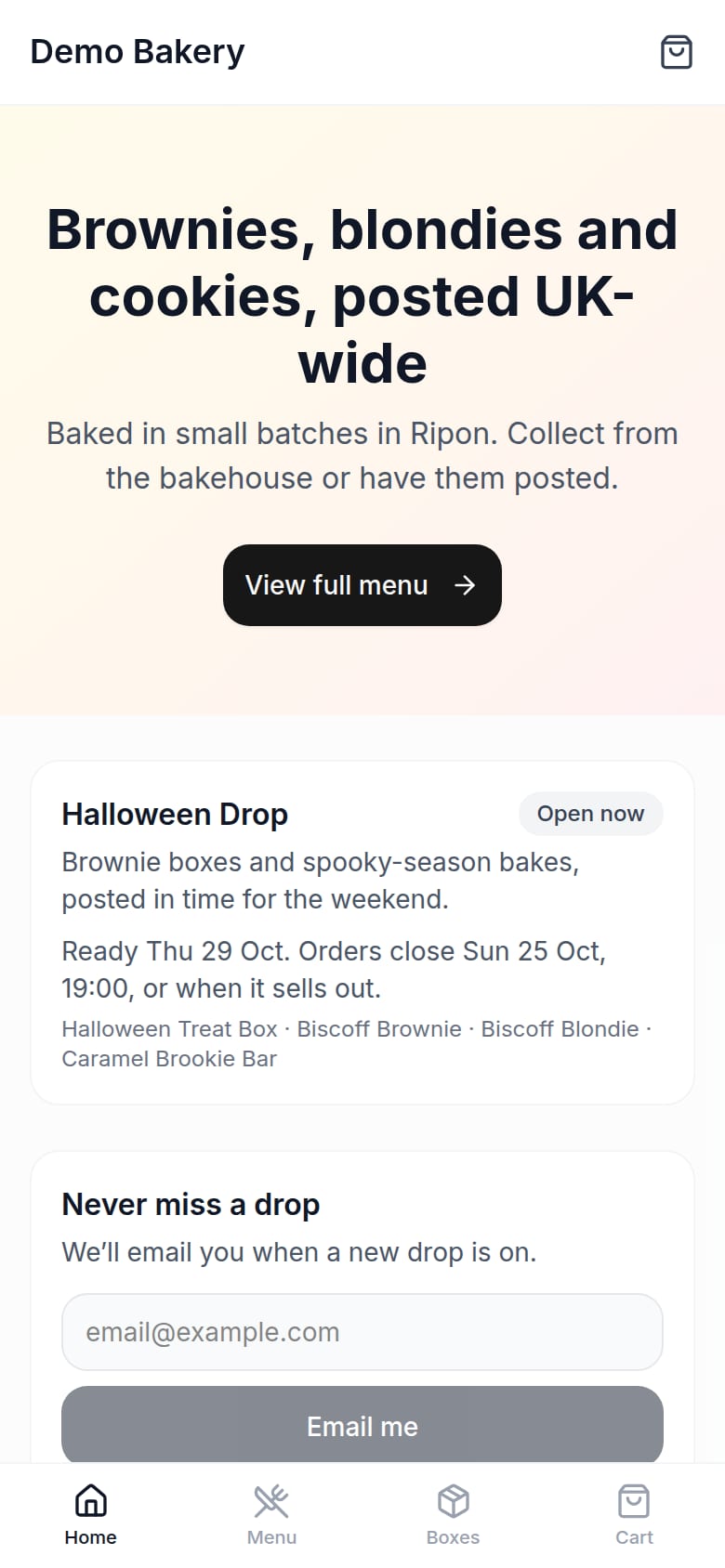
A shop page on a phone, as most customers will see it.
What the page has to do
Show what you bake. A photo, a name, a sentence and a price for each product. If you quote for every celebration cake, leave the price off. A page without prices is better than prices that are wrong.
Say what is in it. This is the part a page builder can't do for you. If you take orders at a distance (online, by phone, by message), the law expects allergen information to be available before the customer commits to buying. It then has to be given again when the food is handed over. See market stall and celebration cakes for the distance-selling rule in full. Your shop page is where the "before" happens.
Say how to get it. Opening hours, where you collect from, whether you deliver or post, and how to reach you.
The allergen problem with an ordinary website
On a website builder, the allergen line under each product is text you typed. Nothing connects it to the recipe. Change your brownie to a different chocolate and the label in the kitchen changes, but the website doesn't. Nobody notices until a customer reads one thing and eats another.
That gap is the risk. The allergens a customer reads online have to come from the same place as the label on the box.
In BakeCheck, they do. A product's allergens show on your shop page only once its ingredient label is approved, and only while that label still matches the recipe. Change the recipe and the old allergen information comes down straight away. Until you approve the new label, the product asks customers to get in touch about allergens rather than showing a guess.
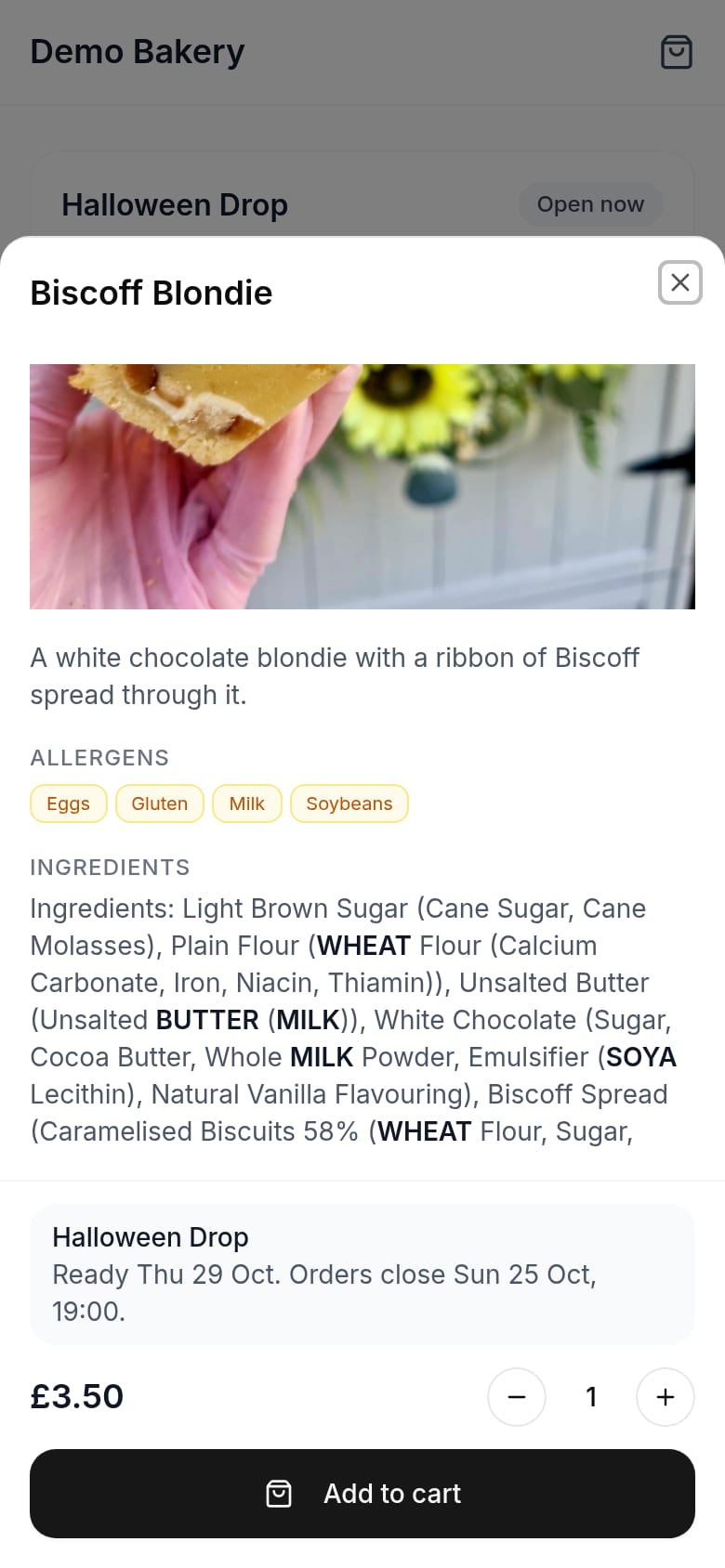
Allergens and ingredients come straight from the approved label. Nobody types them twice.
Two ways to take orders
A showcase. Customers browse, then order the way they already do. Each product has buttons to call, email or message you on Instagram or Facebook, with the product named in the message. There's no checkout to set up and nothing is taken from your sales. Every BakeCheck plan includes this, the free plan too.
Ordering on the page. Customers add bakes to a basket and choose collection, delivery or post, whichever you offer. They pick a date your schedule allows and place the order. You can let them pay on collection, by card, or give them the choice. Card payments go straight to your own Stripe account, so the money is yours, and BakeCheck takes no fee. If you'd like this, ask us to turn it on from your settings. After that, you switch it on and off yourself.
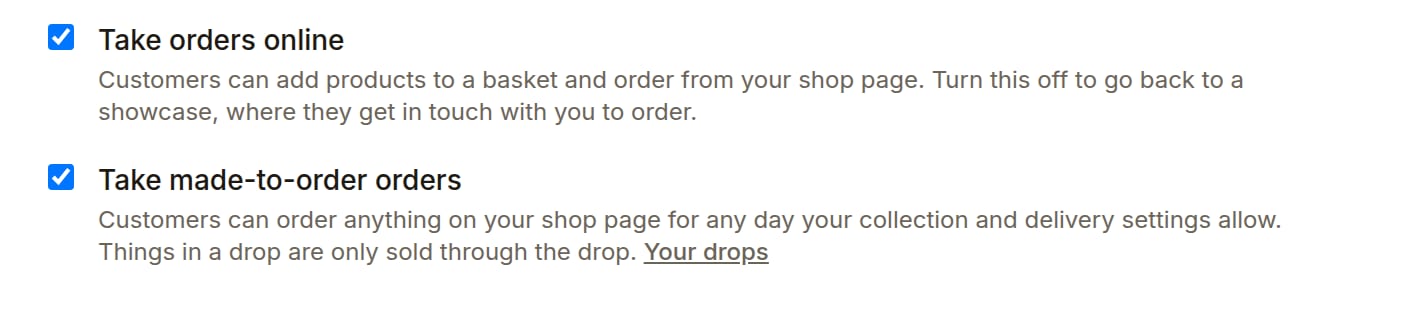
Once ordering is available, it's a switch in your settings.
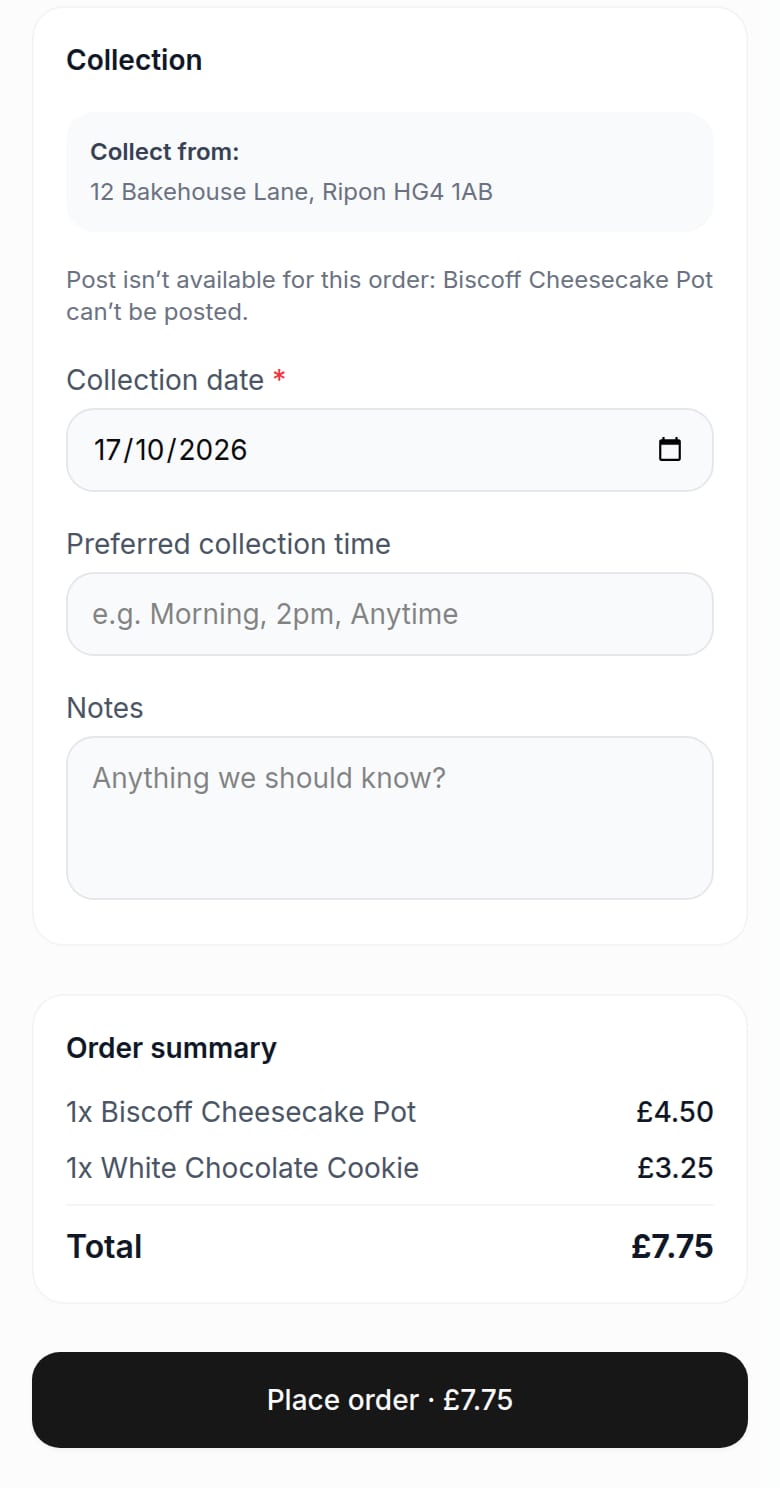
Checkout. Customers can only pick a date your schedule allows.
Your weekly collection and delivery days, and any dates you're closed, apply to both. Nobody can book a Tuesday collection if you don't open on Tuesdays.
Your own address
The shop page lives at a BakeCheck address that you can share anywhere. On a paid plan it can sit on a domain you already own instead. If you don't have a domain, we can register one for you at an extra cost.
Practical setup
- Add your products and approve their labels first. That's what puts the allergens on the page.
- Add a photo for each product. A page of grey boxes doesn't sell anything.
- Fill in only the contact routes you actually answer.
- Put the link where your customers already are: your Instagram bio, a sign on your stall, a sticker on the box.
- If you sell in limited batches rather than to order, read bakery drops.
General guidance, not legal advice. Rules differ between England, Wales, Scotland and Northern Ireland. Check Food Standards Agency guidance and your local authority.
BakeCheck keeps ingredients, recipes and allergen-checked labels in one place, with an approval step before anything prints and a version history you can point at afterwards.
Start free